
Towards a renewed theology of human dignity
michael young
There is a yearning at the center of humanity to comprehend what is too big to understand. We look out at the universe, or into a grief too heavy to carry, and we need it to mean something. So we build institutions to hold the meaning for us and to help us through the difficulties of this journey we call life. Yet too often the very institutions we rely on stand in the way of human dignity.
Faith is one way we reach for meaning. Worship, prayer, and other spiritual practices keep us grounded in reality while opening us to something larger than time and space.
The faith tradition I call home is Christianity. At the center of that home is Jesus, the One who shows us the way toward wisdom and faith. When I look at Him, I see the essence of the mysterious Divine, the One we call God. In Him I see the material world living and moving and having its being within the Spirit, and as part of it. We witness the same thing each time we come to the communion table, where ordinary bread and cup, the stuff of the material world, become a meeting place with the Spirit.
If Jesus shows us the heart of God, then we should pay attention to what makes Him weep.
Luke tells us that as Jesus came near Jerusalem and saw the city, He wept over it. This was the center of His own people’s faith, the place built to hold the meaning. He wept because it had not recognized “the things that make for peace.” It had lost sight of the people it was for.
That is still what makes Him weep. Every human being bears the image of God, a dignity given before any institution existed and one that no institution can grant or take away. When we deny the dignity of any human being, we deface the image of God in them, and Jesus weeps.
On a Monday in late September, as CNN reported, twenty-five children sat in the pews of an immigration courtroom in Harlingen, Texas. One of the first called before the judge was a thirteen-year-old boy from Honduras named Angel.
He had no lawyer. The judge asked whether there was any reason he could not go back.
Angel answered that his mother and nearly all his family were here, and that home was too dangerous. The judge told him he did not qualify for asylum and asked him to choose: leave voluntarily or be ordered removed.
Angel said he didn’t know. Then he began to cry. “I have no one,” he said. “I have nothing.” The judge told him the law was strict and gave him until the end of the month to appeal.
A thirteen-year-old stood alone before an institution built to hold justice, and it had lost sight of his dignity.
Angel is one of many. CNN reports that children as young as two are appearing in immigration courts across the country, many of them without a lawyer. The Guardian reports that children are being detained in record numbers, some of them alone, in places where neither lawyers nor family can find them.
One of them is a sixteen-year-old known in court papers only as JAI, who had lived in Texas with his family for eight years. In a court declaration reported by the Guardian, he described officers charging into his home at five in the morning and going to his twelve-year-old brother’s room. “They pointed a gun at my little brother,” he said. By his account, both boys were thrown against a wall and handcuffed.
None of this arrived without warning. A candidate for president promised to build “a big, beautiful wall” and to deport millions of people living here without legal status. We heard him. We elected him, and then we elected him again.
A wall is the plainest thing an institution can build: a line that says who belongs and who does not. We were told where the line would be drawn, and we chose it.
We did not only choose a candidate. We chose what our institutions would become, and the weight of that choice is falling on children.
However any one of us voted, this belongs to all of us. It is not finally about one candidate or one political party. It is about us, the people who call America home, and what kind of home we are building.
Now we are seeing the fruit of our actions, and the fruit has a name. Angel.
And Angel bears the image of God. Even if America refuses to see his dignity, Jesus sees, and Jesus stands weeping in every courtroom where children bear the brunt of a broken system.
“Let us make humankind in our image.” That is the ancient claim of Genesis: Imago Dei. The text makes no exception for immigration status. It names only the dignity of what God has created. If that is true, then the heart of God is broken every time we allow our institutions to look past the dignity of a single person.
Yet remember what no institution can touch: our human dignity, our divine spark. It is what connects us to one another. It is the something larger we have been reaching for all along, larger than time and space, holding all of creation in relationship.
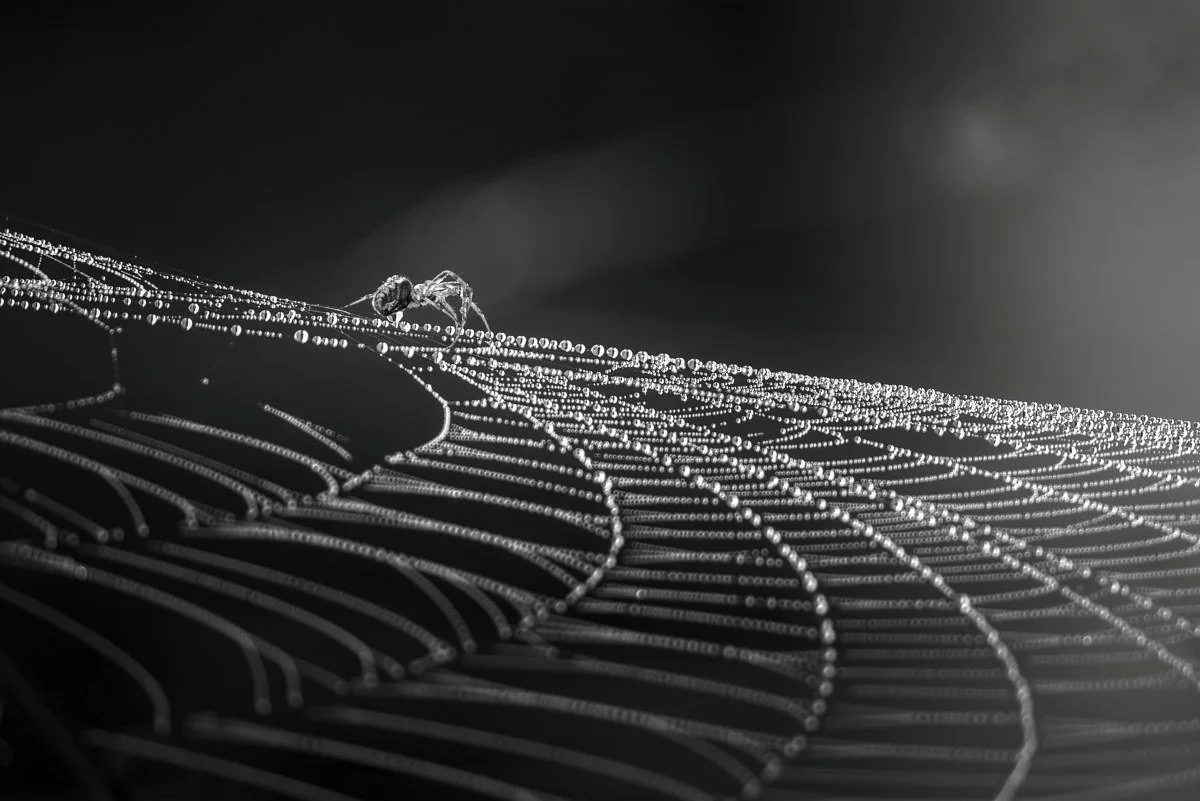
Think of a spider’s web. Every thread the spider spins stays joined to every other. Touch a single strand and the whole web trembles.
That is how connected we are: not by how we appear on the outside, but by the dignity we carry within. When a child weeps in a Texas courtroom, the whole web trembles.
Fannie Lou Hamer said it plainly: “Nobody’s free until everybody’s free.” Rev. Dr. Martin Luther King Jr. named the world we are meant for: the Beloved Community.
This is the renewed theology we are reaching toward: human dignity comes before every institution, and every institution must answer to it. It is a way of life that runs deeper than political parties and will outlast every election.
If our institutions could become places where the divine spark in everyone is honored, including those who long to call America home, we might yet build that Beloved Community and become what we have always said we yearned to be: united.
We chose the wall. We can choose again.


